
Franchise vs Independent Business: Ownership Risk, Investment, and Growth Compared
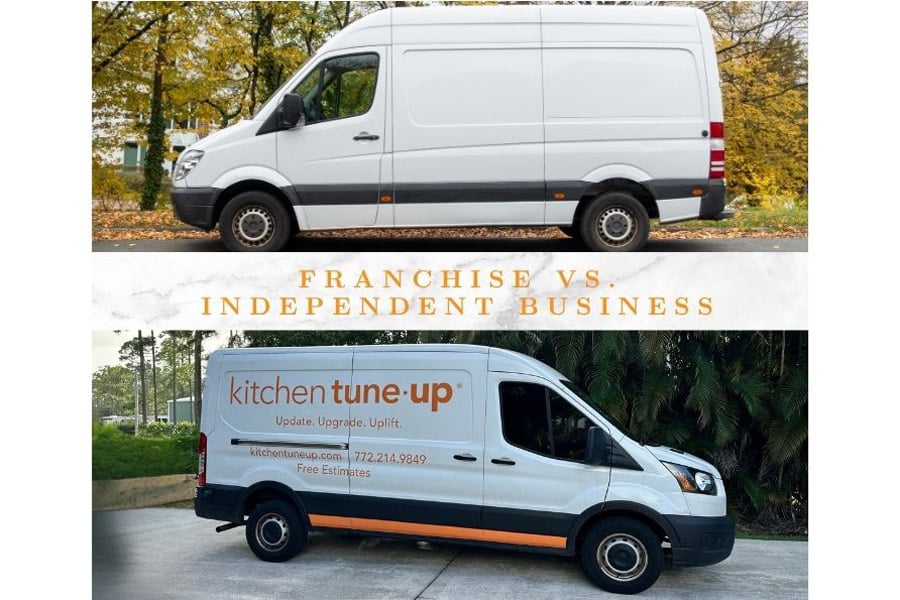
Thinking about starting a remodeling business? The franchise vs. independent business decision is the first big choice you’ll have to make as a business owner. It can be difficult to know which is the best option for you and your goals if you haven’t been through the process before. Let’s take a closer look at the franchise vs. independent business choice, as well as what makes franchising a sound investment in remodeling.
Should I Start a Remodeling Business or Buy a Franchise?
There are upsides and downsides to both business models, so you’ll want to be honest with yourself about your priorities. In many cases, the decision comes down to how much control you want, and how much uncertainty you’re comfortable managing, especially in the early stages of business ownership.
- Independent businesses offer total autonomy. You get to decide the brand’s identity, the products and services you provide, your business model, and how you want to engage with the market. For entrepreneurs with a clear vision and experience building systems from scratch, this path can be appealing. However, that flexibility also means you’re responsible for developing operations, marketing, and processes on your own, which can increase early-stage uncertainty.
- Franchises are structured to reduce some of that uncertainty. As a franchisee, you’re able to step into a turnkey business model that’s been proven to succeed. You’ll also receive training opportunities, resources, and support throughout the life of your business. While franchisees follow a proven framework, they still manage day-to-day operations within their local market.
Top Advantages of Choosing a Franchise
1. Proven Systems and Procedures
Creating a business from scratch is challenging. Developing a business model, building workflows, and refining processes takes time, and mistakes along the way can be costly.
Franchisees don’t have to worry about that. For most entrepreneurs, the main reason to choose a franchise vs. independent business is the ability to step into a turnkey business model that’s been perfected over time.
Franchise systems are designed to reduce that trial-and-error period by providing established processes that have been tested across multiple locations. This allows new business owners to focus more on execution rather than building systems from the ground up.
Brand recognition can also play a role. Half the battle of growing your business is building a customer base, and when you’re operating a brand people in your community have heard of before, they’re more likely to give you a try. An independent business owner will have to work significantly harder at attracting customers, leading to slower growth and higher rates of failure than franchises have.
2. Initial and Ongoing Training
For those who are new to remodeling, franchising is the clear choice. Rather than having to spend years learning the trade, remodeling franchise owners are able to hit the ground running with the training they need to successfully operate their business.
At Kitchen Tune-Up, we don’t require franchisees to perform services. We’ll train you on day-to-day operations, management, and leadership, then help you hire a team of skilled installers to handle the actual remodeling work. Your Kitchen Tune-Up experience includes:
- A four-week online pre-training course;
- Thirteen (13) days of virtual and in-person training at our Experience Center outside of Dallas;
- Building your structured 12-week launch plan with accountability to help build momentum as you prepare to open.
Ongoing education is also a key part of many franchise systems. Kitchen Tune-Up offers continued learning through online modules, virtual trainings, coaching sessions, and peer collaboration across the franchise network.
3. Robust Support and Resources
One of the biggest differences between a franchise vs. independent business is the level of support available, especially in the early years.
When you open an independent business, you’ll be going it alone more often than not. Franchisees are never alone. Whether you’re having a difficult time solving a problem, you’ve run into an unexpected issue, or you’d simply like someone to bounce ideas off of, franchisees rely on their relationships with both the home office and other franchisees in the system to keep moving forward.
At Kitchen Tune-Up, this support extends across multiple areas of the business. Franchisees have access to sales coaching systems that combine AI-driven feedback with personalized guidance from experienced leaders. On the customer side, tools like the brand’s design quiz help streamline the sales process and create a more tailored experience for homeowners.
Marketing is another area where franchise systems can provide structure. Kitchen Tune-Up provides access to both national and local advertising initiatives. We go beyond that to supply franchisees with a full-stack digital marketing toolkit that’s tailored to the needs of your local area. Our local area marketing approach incorporates paid ads, social media, and email marketing, as well as traditional print collateral like mailers, door hangers, and yard signs. We’ll help you determine the best way to reach your community, and we use real-time analytics to refine your message as you go.
4. Financial Transparency
It’s hard to know what an independent business will cost to get up and running, let alone run. Inadequate cash flow is by far the most common financial issue faced by independent businesses; in fact, the U.S. Chamber of Commerce estimates that 88% of small businesses will be impacted by cash flow disruptions.
Even the most detail-oriented financial planning – like balance sheet forecasts and an estimated ROI – is likely to miss hidden costs. While nothing can eliminate the risk of money challenges, franchising offers a high level of transparency that helps entrepreneurs create a smarter budget and achieve their goals.
During the franchise process, you’ll receive a copy of your brand’s Franchise Disclosure Document, or FDD. Franchisors are required by law to provide you with an up-to-date FDD. In the FDD, you’ll find lots of important information about your franchisor’s systems and place in the market, including a thorough breakdown of your initial investment. Some important FDD sections to note:
- Item 7 outlines estimated initial investment ranges, helping prospective owners understand startup costs
- Item 6 details ongoing fees, such as royalties and brand fund contributions
- Item 19 (when provided) may include financial performance information to help contextualize system-wide results
While every business involves financial risk, this level of transparency can make it easier to plan and budget compared to starting entirely from scratch.
As a general consideration, some service-based and home-based franchise models may operate with lower overhead than traditional brick-and-mortar businesses, though costs will vary depending on the brand and market.
Start Your Journey with Kitchen Tune-Up
As part of a franchise system that has expanded to hundreds of locations across North America, Kitchen Tune-Up continues to grow its footprint, reflecting ongoing demand for its services and the scalability of its model.
Franchisees benefit from established processes, training, and ongoing support designed to help them navigate the challenges of business ownership while focusing on building their local market.
For full details on investment and ownership, prospective franchisees should review the FDD.
Inquire now, and one of our franchise advisors will be in touch with more information.